



Ketchup on eggs. Ketchup on oats.
I can already see you rolling your eyes—trust me, I get the same reaction every time I post this breakfast combo on social media. But here's what I've learned after years of hybrid athlete nutrition: the moment you choose "perfect" over sustainable, you've already set yourself up to fail.
Picture this: At 01:06 in my daily nutrition breakdown video, I'm standing in my kitchen, casually combining ½ cup of old-fashioned oats with 5 whole eggs, topped with avocado and—yes—ketchup. It's unconventional. It flies in the face of every pristine "clean eating" post you've ever scrolled past. But here's the kicker: it actually works.
This single "imperfect" meal has powered me through everything from grueling 20-mile runs to crushing 500-pound deadlifts. Why? Because it delivers on the performance markers that truly matter: sustained energy release, zero decision fatigue, and—perhaps most importantly—it's something I genuinely want to eat every single day.
Here's the hard truth most nutrition for hybrid athletes content won't tell you: those pristine meal plans that look Instagram-worthy? They're designed to fail in real life. Your weird food combinations, your time-saving shortcuts, your "imperfect" but rock-solid consistent habits—these aren't flaws in your approach. They're your secret weapons.
After juggling a demanding business, marathon training, and serious powerlifting for years, I've discovered something profound: the best diet isn't the most perfect one—it's the one you'll actually stick to when life gets messy.
Ready to abandon the perfectionist trap forever and build a hybrid athlete nutrition system that thrives in your chaotic, high-demand life? Let's dive in.
Why Most Hybrid Training Diets Fail: The Reality Check
Let's have the conversation nobody in the fitness industry wants to address: you simply cannot be elite at everything simultaneously.
If you want to be good at something, you need to focus on just running... if you want to be the strongest powerlifter ever, you have to focus on powerlifting. There is a give and take, there's a balance that has to be in order.
Before you close this tab thinking I'm crushing your dreams—I'm not. This is strategic realism, not defeat. Once you embrace the fact that peak performance in opposing disciplines demands smart compromises, nutrition for hybrid athletes transforms from an afterthought into your most powerful optimization tool.
The Hidden Costs of Dual Training
Here's what actually happens inside your body when you're pushing both strength and endurance limits simultaneously:
Your physiology becomes a complex resource allocation game. When I'm deep in both marathon training and powerlifting cycles, I witness this internal battle firsthand:
- Glycogen stores decimated by a 20-mile run simply aren't available for crushing a heavy deadlift session just six hours later
- The inflammatory cascade from high-volume squats directly competes with your body's recovery demands from interval running
- Central nervous system fatigue from explosive barbell movements sabotages your endurance performance
You can really use nutrition to your advantage... getting in enough calories, getting enough protein, carbs.
But here's the critical insight: "enough" for a hybrid training diet operates on an entirely different scale than "enough" for athletes focused on a single discipline.
The key isn't eating more of everything—it's eating strategically for dual demands.
The Nick Bare 5-Meal System: Precision Where It Matters, Flexibility Where It Doesn't
After years of experimenting with every nutrition approach imaginable—from strict bodybuilding meal prep to endurance-focused carb loading—I've landed on something different. This isn't just another meal plan. It's a strategic system that prioritizes long-term sustainability while maximizing performance outcomes.
Each meal in this system serves a distinct performance purpose, but here's the game-changer: it's designed to work within the constraints of a demanding professional life, not despite them.
Complete supplement prep guide for hybrid athletes
What Makes This System Different:
- Strategic timing over rigid schedules—work with your life, not against it
- Macro targets over obsessive calorie counting—focus on what drives results
- Meal assembly over complex prep—build meals, don't slave over recipes
- Performance outcomes over arbitrary food rules—results matter, perfection doesn't
Ready to see exactly how this works in practice? Let me walk you through exactly what I eat, when I eat it, and the performance science behind every choice in my hybrid athlete nutrition approach.
Meal 1: 6 AM Foundation Combo
Here's where I lose about 90% of the fitness community—and you know what? I'm completely fine with that. I'm about to tell you that ketchup on eggs and oats isn't just acceptable, it's actually strategically brilliant.
This isn't me trying to be different for the sake of it. This is about engineering a breakfast so inherently sustainable and genuinely enjoyable that decision fatigue gets completely eliminated from your morning routine. When you love what you're eating, consistency becomes effortless.
The Recipe:
- 1/2 cup old-fashioned oats
- 5 whole eggs
- 1/2 medium avocado
- Ketchup (yes, really—and proudly)
- Salt and pepper to taste
Macros:
- Protein: ~35g | Carbs: ~35g | Fat: ~25g | Calories: ~475
Why This Works for Hybrid Athletes:
This seemingly simple combination delivers 4-6 hours of rock-solid energy stability without the insulin rollercoaster that leaves you crashing mid-morning. The synergy here is deliberate: complete protein from eggs builds and repairs muscle, complex carbs from oats provide sustained fuel for your brain and muscles, while healthy fats from avocado slow digestion for extended energy release.
When you're juggling business demands with serious training in both strength and endurance, this kind of metabolic stability isn't just helpful—it's essential for peak performance.
🎯 Quick Implementation: Batch-cook a week's worth of oats every Sunday. Each morning, simply reheat while scrambling your eggs. Total active prep time: 4 minutes. Total excuses eliminated: all of them.
Meal 2: 12 PM Assembled Precision
By 9:40 AM, I'm building what I call an "assembled meal"—and this concept will revolutionize how you think about meal prep. Here's the strategy: deploy laser precision where it matters most (protein), while maintaining complete flexibility everywhere else.
This approach solves two critical problems that derail most nutrition plans: flavor fatigue from eating identical meals, and the performance-crushing disaster of accidentally under-eating protein when you're training at high volumes.
The Recipe:
- 8.1 oz shredded chicken breast (precisely weighed)
- 3/4 cup cooked basmati rice and lentil blend
- 1/2 cup mango pico de gallo
- 2 tbsp Bolthouse Farms ranch dressing
- 1/2 cup mixed fresh fruit
Macros:
- Protein: ~55g | Carbs: ~45g | Fat: ~8g | Calories: ~460
Performance Purpose:
This meal's timing is surgical—it's designed to rapidly replenish glycogen stores depleted during morning cardio while simultaneously flooding your system with amino acids to kickstart muscle protein synthesis. The precisely measured protein ensures you're consistently hitting targets that support both strength gains and endurance recovery, not leaving it to guesswork.
🎯 Strategic Implementation: Invest in pre-cooked proteins and portion them immediately when you arrive home from shopping. Having exact portions ready to grab eliminates the dangerous "I'll just estimate" trap that leaves most hybrid athletes chronically under-fueled on protein.
Meal 3: 3 PM Two-Part Pre-Workout Protocol
This is where nutrition for hybrid athletes shifts into tactical mode. At 2:55 PM, I'm not just eating—I'm strategically engineering my energy systems for what could be a brutal 3+ hour dual-training session.
Most people approach pre-workout nutrition with a "grab whatever" mentality. That's a recipe for bonking mid-session. This two-part system separates fast-digesting protein from slower-releasing carbs and fats, creating a staged fuel release that powers you through extended, high-intensity work.
Part 1 - Carb/Fat Component:
- 1 Dave's Killer Bread bagel
- 2 tbsp natural peanut butter
- 1 tbsp raw honey
Part 2 - Protein Component:
- 2 scoops whey/casein protein blend (88%/12% ratio)
- 2-3 oz water for "sludge" consistency
Combined Macros:
- Protein: ~50g | Carbs: ~65g | Fat: ~18g | Calories: ~590
The "Sludge" Technique:
Here's where I get weird again—but stick with me. Mix your protein powder with just enough water to create a thick, pudding-like consistency. This isn't about convenience; it's about performance. The "sludge" delivers concentrated amino acids without the liquid volume that would slosh around and potentially cause nausea during intense movement patterns.
🎯 Mastery Tip: Perfect your sludge by adding water drop by drop while mixing. You're aiming for a consistency that holds its shape on a spoon but still goes down smoothly. Too thick and it's chalky; too thin and you've defeated the purpose.
Meal 4: 7 PM Post-Workout Recovery Engine
By 7 PM, I'm officially in recovery mode—and this is where the magic happens. Most people think the workout is where gains are made. Wrong. Your gains happen during recovery, and this meal is your recovery accelerator.
This isn't just about eating something; it's about rapid glycogen replenishment combined with a complete amino acid profile to maximize muscle protein synthesis. Here's what most people miss: you have a narrow post-workout window where your muscles are essentially begging for nutrients. Miss this window, and you've wasted hours of hard training.
The Recipe:
- 1.5 cups cooked jasmine rice
- 6 oz grilled chicken breast
- 1/2 cup roasted bell peppers and onions
- 1/2 cup fresh pineapple chunks
- 2 tbsp coconut flakes
- 3 tbsp sweet and sour sauce
Macros:
- Protein: ~55g | Carbs: ~75g | Fat: ~8g | Calories: ~575
🎯 Game-Changing Strategy: Batch cook proteins and carbs every Sunday, then rotate different vegetable and sauce combinations throughout the week. You get identical macro precision with completely different flavors—solving both the consistency and variety equation simultaneously.
Meal 5: 10 PM Strategic Sleep Fueling
This is where I completely lose the conventional fitness world—and honestly, I'm okay with that. At 10:08 PM, while every fitness influencer is preaching about cutting off food intake, I'm deliberately consuming what most would call a "high-energy meal" designed specifically to fuel tomorrow morning's performance.
I know what you're thinking: "Nick, eating before bed will make me fat." Let me share what actually happens when you understand the science of strategic evening nutrition.
The Recipe:
- 2 slices Ezekiel sprouted grain bread
- 2 tbsp natural creamy peanut butter
- 1 tbsp blackberry preserves
Macros:
- Protein: ~12g | Carbs: ~35g | Fat: ~16g | Calories: ~320
The Science Behind Evening Eating:
If I consume a meal that is higher in fat, higher in carbs right before bed... my morning run is amazing.
This isn't about midnight snacking—it's about creating a "time-release" fuel system.
The fats dramatically slow digestion, ensuring nutrients are still being steadily released 8+ hours later when you wake up. Instead of starting your morning run on empty, you're starting it optimally fueled.
🎯 Performance Hack: Set a 9:45 PM phone alarm to prepare this meal. Consistency in timing is what transforms this from an interesting concept into a legitimate performance advantage.
Nick Bare's Strategic Supplement System: Context Over Convenience
Here's where most people completely miss the mark: they approach supplements like they're collecting Pokemon cards—gotta catch 'em all. That's not just expensive; it's counterproductive and often harmful.
My system operates on a different philosophy entirely. Instead of following some rigid daily protocol regardless of what's happening in your training, I adapt supplementation to match actual training demands. Smart, strategic, and surprisingly simple.
Complete supplement timing guide for hybrid athletes
The Foundation: Morning Insurance Policy
Product: Bare Performance Nutrition "Strong Greens"
Timing: First thing in the morning, 30 minutes before cardio
Purpose: Nutritional insurance when you're training 10+ hours per week and pushing your body beyond normal limits
Key Ingredients:
- Wheatgrass & Chlorella: Dense micronutrients that most athletes completely miss in their whole-food diet
- Ashwagandha: Cortisol regulation and stress management—crucial when training volume is high
- Turmeric: Natural anti-inflammatory specifically for training-induced inflammation
Why This Actually Matters: Missing key vitamins and minerals isn't just about feeling "a little tired.” It creates a performance-destroying cascade: compromised recovery, increased injury risk, weakened immune function, and subpar adaptation to training stress. This formula proactively fills those gaps before they become problems.
Pre-Workout Strategy: Match Supplements to Session Demands
Option A: Non-Stimulant Endurance (Endopump)
Best For: Hypertrophy sessions, high-volume training, evening workouts
Key Ingredients:
- L-Citrulline (6g): Increases blood flow and nutrient delivery
- Beta-Alanine (3.2g): Buffers lactic acid, delays muscle fatigue
- Betaine (2.5g): Enhances power output
Option B: Stimulant-Based Energy (Flight)
Best For: High-intensity sessions, early morning training, low motivation days
Key Ingredients:
- Caffeine Anhydrous (300mg): Increases alertness, reduces perceived exertion
- N-Acetyl L-Tyrosine (1g): Supports neurotransmitter production for focus
Decision Tree for Pre-Workout Selection:
- Evening sessions (after 4 PM): Endopump only
- Morning sessions: Either product, Flight preferred for harder sessions
- Maximum intensity days: Stack both products
- Consecutive training days: Alternate to prevent tolerance
Intra-Workout Fueling: The Session Extender
When You Need It:
- Sessions longer than 90 minutes
- Two-a-day training schedules
- Hot/humid conditions
The Formula:
- Cluster Dextrin: 25-50g per hour (no insulin spike or crash)
- Essential Amino Acids: 10-15g total (prevents muscle breakdown)
- Electrolytes: Sodium and potassium for nerve function
Real Impact: Maintains power output throughout extended sessions and reduces muscle protein breakdown by up to 25% during training.
Creatine: The Only Supplement That Actually Matters
If your budget or patience only allows for one supplement, make it creatine monohydrate. Period. It's not just the most researched performance enhancer in existence—it's also the most proven, most reliable, and most universally beneficial.
While supplement companies want to sell you complicated stacks, the reality is beautifully simple: creatine works, it's safe, and it delivers measurable results for hybrid athletes.
Dead Simple Protocol:
- Amount: 5g daily (about 1 level teaspoon)
- Timing: Literally doesn't matter—consistency beats perfect timing every time
- Loading: Optional but accelerates benefits (20g daily for 5-7 days, then back to 5g)
Real Performance Benefits:
- 5-15% improvement in peak power output—measurable in both your deadlift and sprint performance
- Significantly better performance in repeated high-intensity efforts
- Noticeably faster recovery between sets and training sessions
The Hybrid Athlete Mindset: Optimizing Trade-Offs Through Strategic Nutrition
Let's get crystal clear about what you're actually pursuing here. Understanding the reality of hybrid training isn't just helpful—it's absolutely crucial for long-term success and sanity.
You're not trying to be the strongest person at the Boston Marathon or the fastest runner in your powerlifting gym. You're pursuing something more sophisticated: exceptional capability in both domains while still maintaining your career, relationships, and life priorities.
This requires a fundamentally different approach to nutrition than what you'll find in single-sport resources.
The Macro Philosophy for Dual Demands
After years of systematic experimentation—and I mean real testing, not just trying things randomly—I've landed on a "higher fat, higher protein, moderate carb" strategy for hybrid athlete nutrition.
Higher protein, higher fat, moderate carb - I just feel better, my stomach doesn't feel as full, feels lighter.
But there's science behind this feeling.
The Hybrid Macro Breakdown:
- Higher Fat (25-30%): Provides sustained energy for extended sessions, supports hormone production, and increases satiety without digestive stress
- Higher Protein (30-35%): Simultaneously supports muscle protein synthesis from strength training while accelerating endurance recovery
- Moderate Carb (35-40%): Delivers sufficient fuel for high-intensity work without the digestive burden that kills performance
Critical Reality Check: When I say "moderate carb" for hybrid athletes, I'm still talking about 300-400g daily. It's only "moderate" relative to the astronomical energy demands of dual training.
Evening Eating Strategy: Fuel Tomorrow's Performance Tonight
This is probably the most counterintuitive strategy in my entire system—and also one of the most game-changing for morning performance.
The Discovery: I stumbled onto this by accident. On nights when I'd had a late meal rich in complex carbs and healthy fats, my morning fasted runs didn't just feel tolerable—they felt genuinely powerful instead of like survival exercises.
The Mechanism: Complex carbohydrates and healthy fats consumed before sleep create what I call a "time-release" fuel system. While you're sleeping, these nutrients digest slowly and steadily, ensuring glucose is still being released into your bloodstream when you wake up 8 hours later.
Measurable Results:
- Morning run pace degradation slashed from 15-20 seconds per mile to just 5-10 seconds per mile
- Subjective energy experience completely transformed from "grinding through survival mode" to "genuinely enjoyable and powerful"
- Eliminated that awful "running on fumes" feeling that plagues most morning cardio
Systematic Experimentation: Finding Your Personal Formula
The most important skill for any hybrid athlete is systematic experimentation. Here's your roadmap:
Phase 1: Baseline (Weeks 1-2)
Track:
- Calories & Macros
- Meal Timing
- Energy Levels (1-10)
- Performance Metrics
- Recovery Markers
Starting Point:
- Protein: 1.2-1.6g/lb
- Fat: 25-30%
- Carbs: Remainder
Phase 2: Test (Weeks 3-6)
Higher Fat/Protein:
- Fat: 30-35%
- Protein: 35%
- Monitor: Satiety, Energy
Higher Carb:
- Carbs: 45-50%
- Fat: 20-25%
- Monitor: Intensity, Recovery
Phase 3: Refine (Weeks 7-10)
Timing Experiments:
- Evening Eating vs. Cutoff
- Pre-Workout Windows
- Pre-Workout Macros
Real Performance Data: Why This System Works
Enough theory—let's talk numbers. Here's exactly what happens when nutrition for hybrid athletes is systematically optimized versus generic approaches.
These aren't cherry-picked results or best-case scenarios. This is consistent, measurable data from real training cycles:
Morning Run Performance (12-mile tempo runs):
- Without evening fueling: Devastating 15-20 seconds per mile pace degradation after mile 8
- With strategic evening meal: Minimal 5-10 seconds per mile degradation, maintaining target effort all the way through mile 12
Dual Session Performance (Run + Lift Same Day):
- Standard approach: Crushing 20-25% decrease in lifting volume
- Optimized nutrition timing: Manageable 10-15% decrease while actually maintaining power output
Training Volume Sustainability:
- Generic high-carb approach: Peak training volume sustainable for only 3-4 weeks before forced deload
- Hybrid macro strategy: Peak volume sustainable for 6-8 weeks with superior recovery quality
Body Composition During Training Peaks:
- Traditional approach: Devastating 8-12% muscle mass loss during high-volume endurance phases
- Higher protein hybrid approach: Minimal 3-5% muscle mass loss while maintaining full endurance capacity
Quick Implementation Guide for Hybrid Athletes
Week 1-2: Foundation Building
- Implement the 5-meal framework with approximate timing
- Start creatine supplementation (5g daily, every day)
- Track basic metrics: energy levels, training performance, recovery quality
- Focus on protein targets: Aim for 1.4g per pound of body weight minimum
Week 3-4: Optimization
- Refine meal timing based on your training schedule
- Add strategic supplementation (greens powder, context-based pre-workout)
- Experiment with evening eating strategy
- Fine-tune macro ratios based on performance feedback
Week 5-8: Personalization
- Test macro emphasis variations (higher fat vs. higher carb periods)
- Optimize supplement timing for your specific training demands
- Establish meal prep systems that fit your lifestyle
- Create contingency plans for travel, busy periods, imperfect days
Common Mistakes to Avoid in Hybrid Athlete Nutrition
Let me save you months of frustration by highlighting the traps that derail even the most motivated hybrid athletes. I've made every single one of these mistakes, so consider this your shortcut past the learning curve.
❌ The Perfectionism Trap
The Problem: Chasing some mythical "perfect" meal plan that looks amazing on paper but crumbles under real-world pressure
The Fix: Embrace the 80/20 rule ruthlessly. Eighty percent adherence to a good, sustainable plan will always destroy 50% adherence to a "perfect" plan that you can't actually maintain
❌ Generic Sport Nutrition Advice
The Problem: Trying to force-fit endurance-only or strength-only nutrition protocols onto your dual-demand lifestyle
The Fix: Fully commit to the hybrid training diet approach that actually accounts for the unique stresses you're placing on your body
❌ Ignoring Individual Response
The Problem: Copying someone else's exact plan without considering your unique physiology, schedule, and preferences
The Fix: Use the systematic experimentation approach I've outlined to discover what actually works for your body and lifestyle
❌ Supplement Overcomplication
The Problem: Building a supplement cabinet that looks like a pharmacy without understanding purpose, timing, or necessity
The Fix: Start simple—creatine and greens. Then add supplements only when you have a specific training demand that warrants it
❌ All-or-Nothing Mentality
The Problem: Completely abandoning your entire nutrition system after one imperfect meal or challenging day
The Fix: Build flexibility directly into your approach from day one. Have backup plans, simplified options, and emergency protocols ready
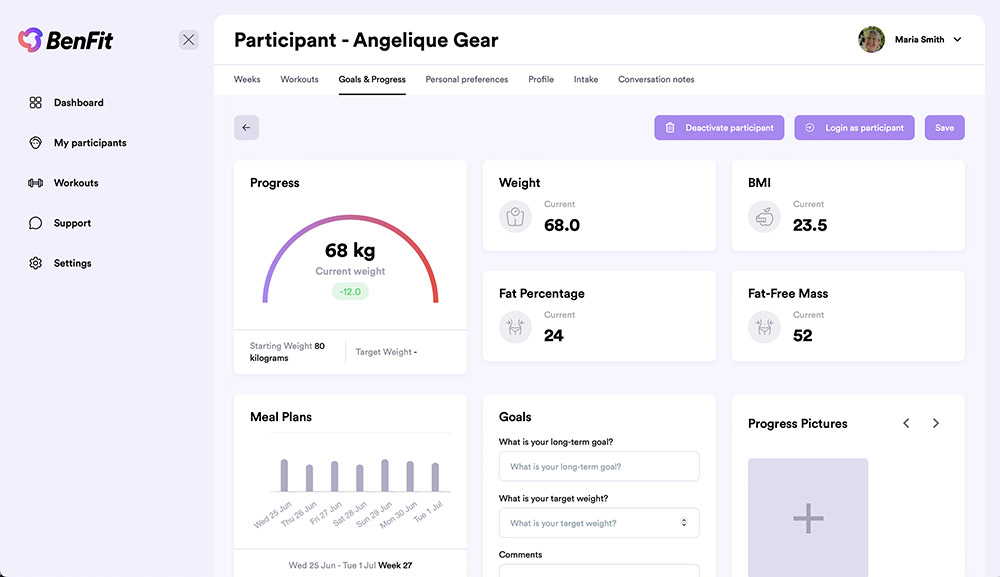
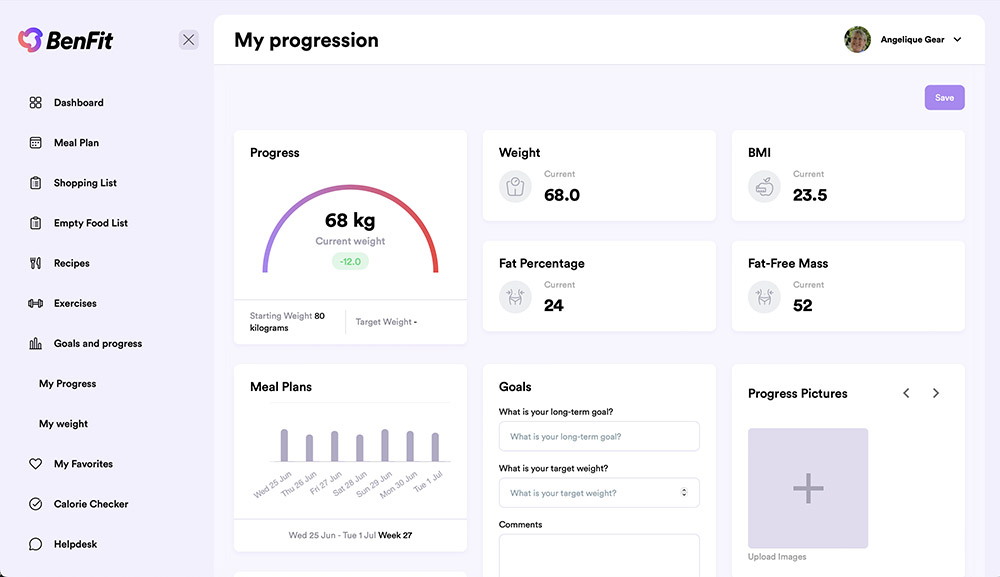
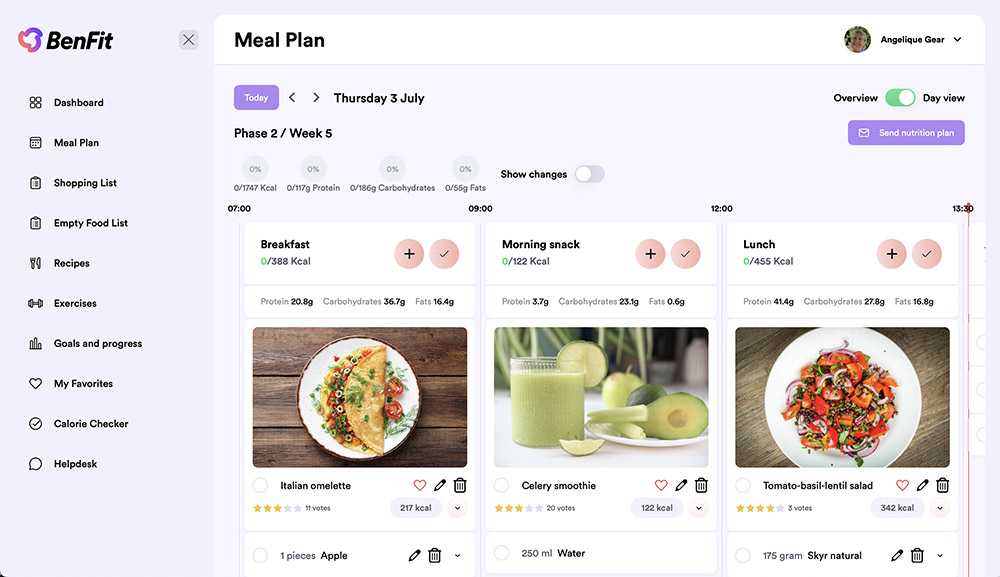
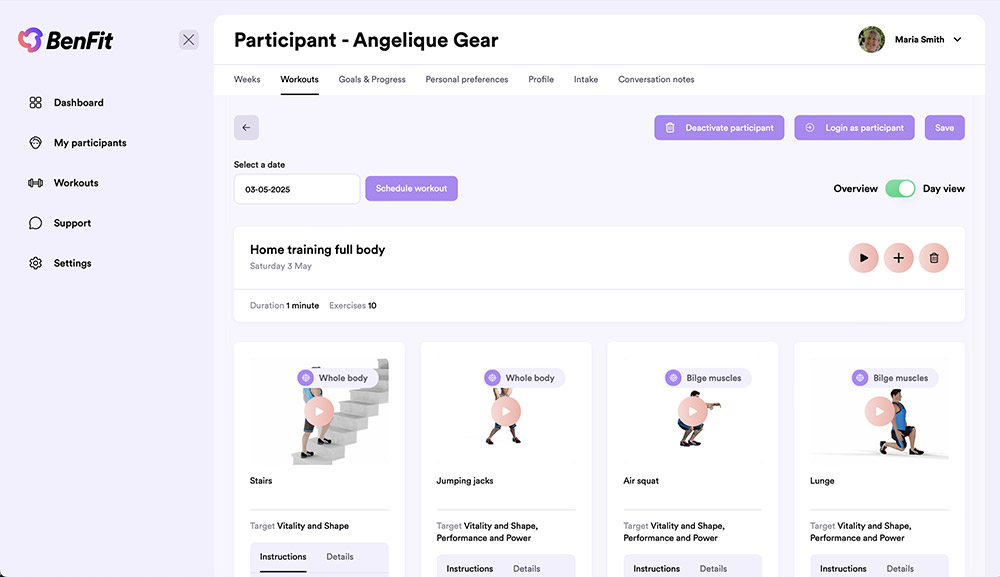
Get Started with Benfit for Free
Frequently Asked Questions About Hybrid Athlete Nutrition
Q: What should I eat between a morning run and afternoon lift?
A: Focus on rapid glycogen replenishment and muscle protein synthesis. Aim for 30-40g carbs and 25-30g protein within 30-60 minutes post-run. Examples: chocolate milk and a banana, Greek yogurt with berries and granola, or a protein smoothie with fruit.
Q: Is it okay to use protein powder as a meal replacement when busy?
A: Occasionally, yes. But pair it with whole food carbs and fats for satiety and micronutrients. A better approach: protein powder + banana + nuts + oats blended into a complete meal replacement that hits all macros.
Q: How much should I eat to recover from two-a-day workouts?
A: Increase total calories by 300-500 above single-session days. Focus on additional carbs (100-150g) and protein (20-30g). Time nutrition around both sessions, not just the second one.
Q: Can I follow this system while cutting body fat?
A: Yes, but modify portion sizes rather than meal timing or structure. Reduce total calories by 10-15% while maintaining protein targets and meal timing around workouts. The system's focus on satiety and stable energy makes cutting more sustainable.
Q: What if I can't stomach food before early morning workouts?
A: This is where the evening eating strategy becomes crucial. Load up the night before, then sip on diluted sports drink or consume 5-10g essential amino acids 15 minutes before training.
Your Next Steps: Building Your Personal Hybrid Athlete Nutrition System
Here's the truth that separates athletes who thrive with hybrid training diets from those who eventually burn out: it's not about superior genetics or unlimited willpower. It's about having a systematic, genuinely sustainable approach to fueling dual demands.
Most people overcomplicate this process. Here's your simple, progressive implementation plan:
Start here:
- This Week: Implement the 5-meal framework using foods you already have and enjoy
- Next Week: Add foundational supplementation (creatine daily + morning greens)
- Week 3: Begin systematic experimentation with macro ratios based on your training response
- Week 4: Fine-tune meal timing to match your specific training schedule
Critical Mindset Shift: The goal has never been perfection. The goal is unwavering consistency with an imperfect but sustainable system that you can actually follow long-term, even when life gets chaotic.
The Most Important Insight: Your "weird" food combinations, time-saving shortcuts, and sustainable habits aren't flaws in your nutrition approach—they're your secret weapons. These are what will keep you training, performing, and progressing long after the motivation-driven, Instagram-worthy approaches have failed.
Performance nutrition for hybrid athletes isn't about copying someone else's exact meal plan down to the gram. It's about deeply understanding the principles, experimenting systematically with your own responses, and building a personalized system that genuinely supports both your strength and endurance goals while fitting seamlessly into your real life.
Ready to stop choosing between being strong or being fast? Start with meal one tomorrow morning. And yes—you absolutely can add ketchup if that's what makes it sustainable for you.
Want more evidence-based nutrition strategies for hybrid athletes? Subscribe to our newsletter for weekly insights on optimizing performance across multiple disciplines without sacrificing your sanity or social life.